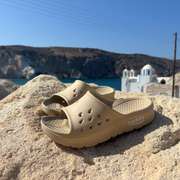
 Treddie Recovery Slides


Not long ago, casual slip-on footwear was synonymous with flat, flimsy flip-flops. They were easy to wear but offered little more than convenience—and certainly nothing in the way of foot health. But over the last two decades, something changed. Major brands like Adidas, Crocs, and OOFOS helped ignite a global movement toward supportive, recovery-focused footwear, reshaping what “comfortable shoes” could look and feel like.
From Flat Flip-Flops to Functional Footwear
Flip-flops were the default summer shoe for years: inexpensive, lightweight, and… completely unsupportive. As podiatrists continued sounding the alarm on issues like arch strain, plantar fasciitis, and poor alignment, consumers began looking for alternatives that wouldn’t leave their feet aching after a few hours.
This shift opened the door for supportive slides. Adidas was one of the first to popularise the genre when they introduced the iconic Adilette in the 1970s—originally designed for German footballers who needed protection from slippery locker room floors. What started as a practical, post-training shoe slowly became a cultural staple, bridging sport and style.
Comfort Becomes Cool
Then came Crocs, a brand that disrupted the industry by proving that comfort could become a trend in itself. Their foam-based designs rewrote the rules of casual footwear, making cushioning and support mainstream. Around the same time, OOFOS emerged with a more recovery-driven approach, introducing proprietary foam and deep foot cradles that absorbed significantly more impact than traditional sandals.
These pioneers paved the way for a new category: orthotic-style slides that combine arch support, cushioned soles, and contoured footbeds—all in a format that’s easy to slip on and off.
From Athletes to Everyday Life
Athletes were the earliest adopters of recovery slides. The goal? Reduce stress on tired feet, improve alignment, and offer shock absorption after intense training. But as athleisure took over fashion and comfort-first design became part of daily style, the appeal spread far beyond sports.
Teachers on their feet all day, retail staff, healthcare workers, busy parents, and people dealing with sore arches all discovered that a supportive slide could become their go-to shoe—whether for errands, walking the dog, or relaxing at home.
Why Orthotic Slides Are Here to Stay
Today’s orthotic slides deliver a balance of style and science:
Proper arch support to encourage natural foot posture
Shock-absorbing cushioning that reduces fatigue
Contoured designs that cradle the heel and midfoot
Slip-on convenience without sacrificing structure
Modern aesthetics inspired by major sports and recovery brands
Consumers no longer have to choose between the look they want and the support they need.
A New Era of Everyday Foot Health
The evolution from flat flip-flops to supportive slides marks a major shift in footwear: people no longer accept shoes that look good but hurt to wear. Brands like Adidas, Crocs, and OOFOS paved the way by proving that comfort can be stylish—and essential.
Treddie represents the next step in that evolution.
Designed in Australia, Treddie slides blend the science of orthotic arch support with modern styling that fits seamlessly into everyday life. They’re built for recovery, alignment, and lasting comfort, but without the bulky, medical look traditionally associated with supportive shoes.
Whether you’re relaxing at home, heading to the beach, running errands, or styling them with casual outfits, Treddie slides are made to go anywhere. Their durable, cushioned sole handles multiple terrains, wet surfaces, and everyday spills, while the contoured footbed cradles your arches to reduce strain and keep your feet feeling fresher for longer.