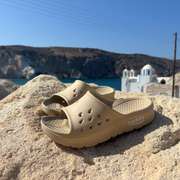
 Treddie Recovery Slides

Recovery Slides vs Thongs

What’s the Difference — and Which Is Better for Your Feet?
In Australia, thongs are a summer staple. From the beach to the backyard, they’re easy, familiar, and part of everyday life. But as more people become aware of foot comfort and long-term foot health, recovery slides and orthotic-inspired footwear have become a popular alternative for everyday wear.
While thongs and recovery slides may look similar at first glance, they’re designed for very different purposes. Understanding those differences can help you choose footwear that better suits how — and where — you spend time on your feet.

Arch Support: Structured vs Flat
Recovery slides are designed with built-in arch support that follows the natural shape of the foot. This structure helps spread pressure more evenly across the sole rather than placing it all on the heel or forefoot. Over time, this can make standing and walking feel noticeably more comfortable, particularly on hard surfaces like tiles or concrete.
Traditional thongs, on the other hand, are usually flat from heel to toe. While this works well for short trips or soft surfaces like sand, the lack of contour means your feet do more work to stabilise themselves — especially during longer periods of wear.

Cushioned Sole vs Flat Sole
One of the biggest differences is underfoot cushioning.
Recovery slides typically feature a thicker, cushioned sole designed to soften impact with every step. This is why they’re commonly worn around the house, after workouts, or during long days on your feet. The cushioning helps reduce the “hard floor fatigue” many people feel when walking barefoot or in thin footwear.
Most thongs use a thin, flat sole with minimal shock absorption. They’re lightweight and flexible, but on hard ground the impact is transferred directly back into your feet and legs.
Orthotic-Inspired Design
Recovery slides are often described as orthotic-inspired, meaning their shape is intentionally designed to support how the foot naturally sits and moves. Common features include a contoured footbed, a gently raised arch area, and a slightly cupped heel for stability.
This design approach reflects a broader shift in footwear, where comfort and support are no longer limited to athletic or medical products. As explored in blog that looks at the rise of arch support footwear, supportive slides are now worn casually — at home, out and about, and as part of everyday routines.
Thongs, by comparison, prioritise simplicity and convenience. They’re designed to be easy to slip on, not to provide structure or support.
Everyday Wear & Recovery
Recovery slides are often chosen for:
- Wearing around the house on hard floors
- After workouts or long walks
- All-day comfort and casual wear
- Times when your feet feel tired or fatigued
Because they’re designed to be worn for longer periods, they offer a more supportive alternative to flat footwear.
Thongs still have their place. They’re ideal for:
- The beach or pool
- Short trips outside
- Hot weather when you want something light and breathable
They’re convenient and practical — just not designed for prolonged wear or recovery.
Which One Is Right for You?
The answer ultimately comes down to personal preference. Thongs are an iconic part of the Australian summer, but their flat design means they typically lack arch support, cushioning, and structure — which can leave feet feeling sore or unsupported after extended wear.
Recovery slides offer a middle ground, combining the laid-back ease of thongs with added support and cushioning designed for everyday comfort.
For those wanting a balance between casual style and support, you can explore our full range of Treddie Recovery Slides designed to be worn indoors or outdoors, before or after activity, and throughout the day.